Water-Damaged Photo Repair
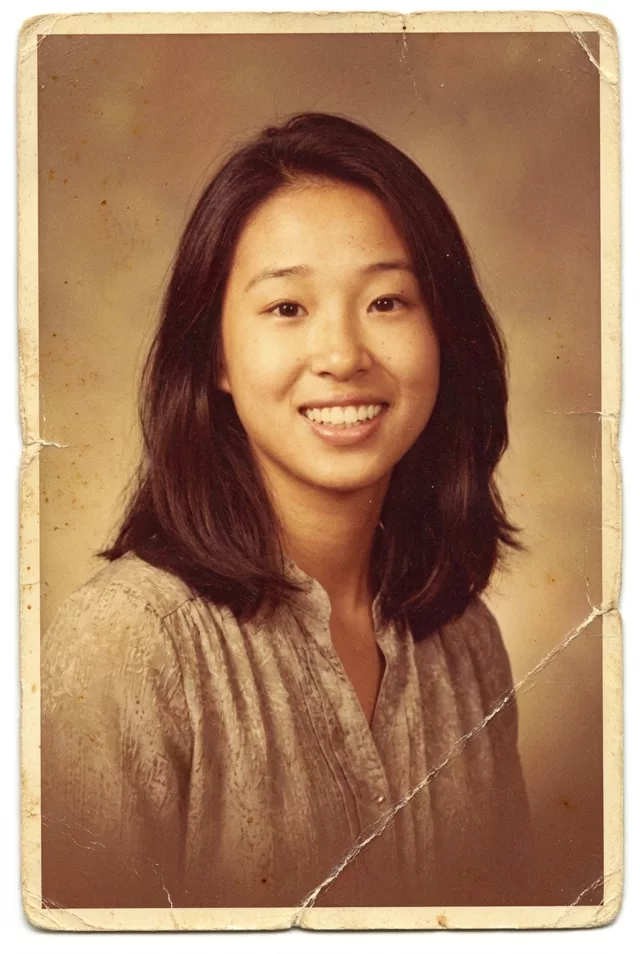
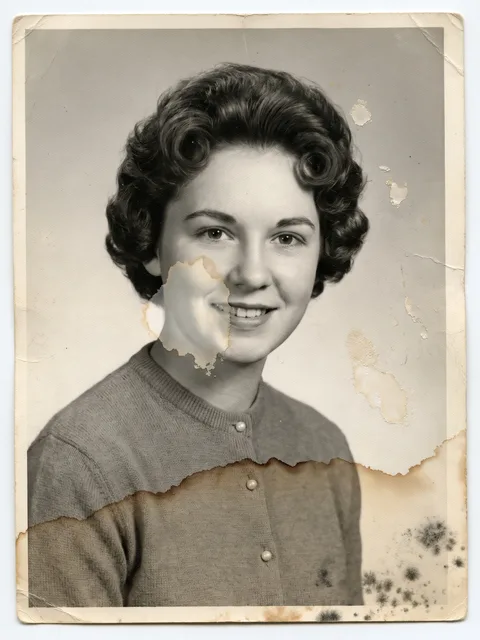
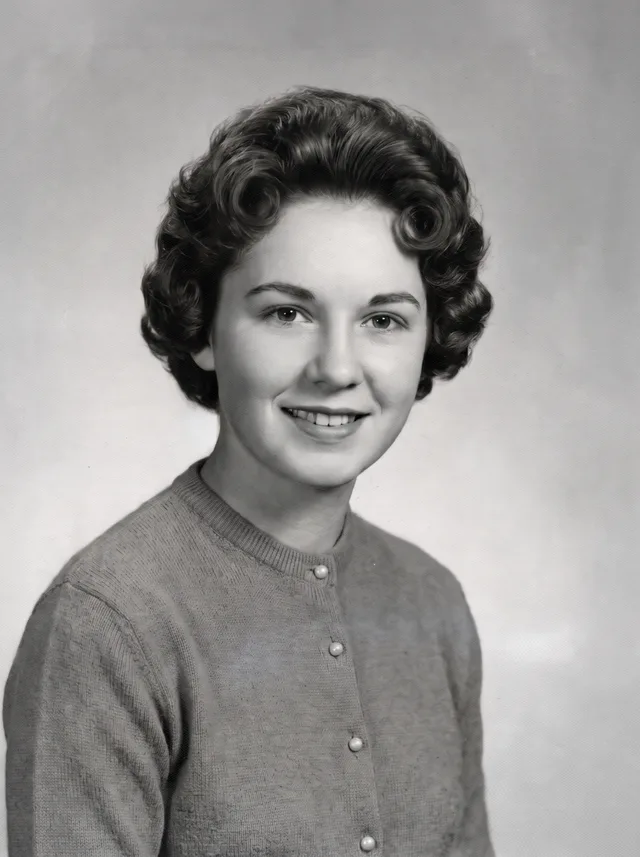
Clear tide-line stains, lifted blotches and mould spots from a water-damaged print, rebuilding a stained cheek to match the rest of the face.
Repair this water-damaged photograph. Remove the brown tide-line stain, the pale lifted blotches and the mould spots completely. Where a blotch covers part of a face, rebuild only that area to match the undamaged side of the same face, and keep every person's exact facial features and expression unchanged; do not beautify or reshape the face. Keep it black-and-white, with the original studio lighting, grain and hairstyle. Show just the photo itself, filling the frame, with no border or background around it. No text anywhere in the image.
How to use it
Only edit photos you have permission to use, including permission from the people pictured.
- Keep an untouched copy and upload the best available scan, including damaged edges you want repaired.
- Attach the source in an AI image editor compatible with this prompt (Gemini · ChatGPT (any AI image editor)), then paste the prompt. Request the correction described below without adding new clothes, expressions, or a replacement setting.
- Compare faces, clothing, and background details with the original. If new detail is invented, reduce the enhancement request; keep the original alongside the edit.
- Save the accepted image separately from the original and label it as AI-edited when sharing. Use the saved edit as the source if you choose to animate it next.
What happened when we tested it
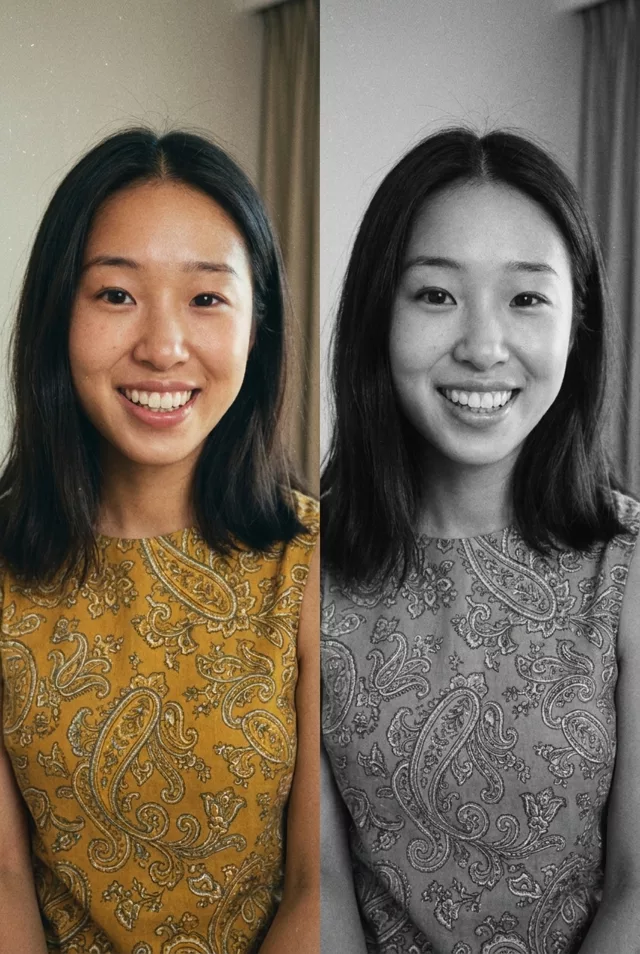
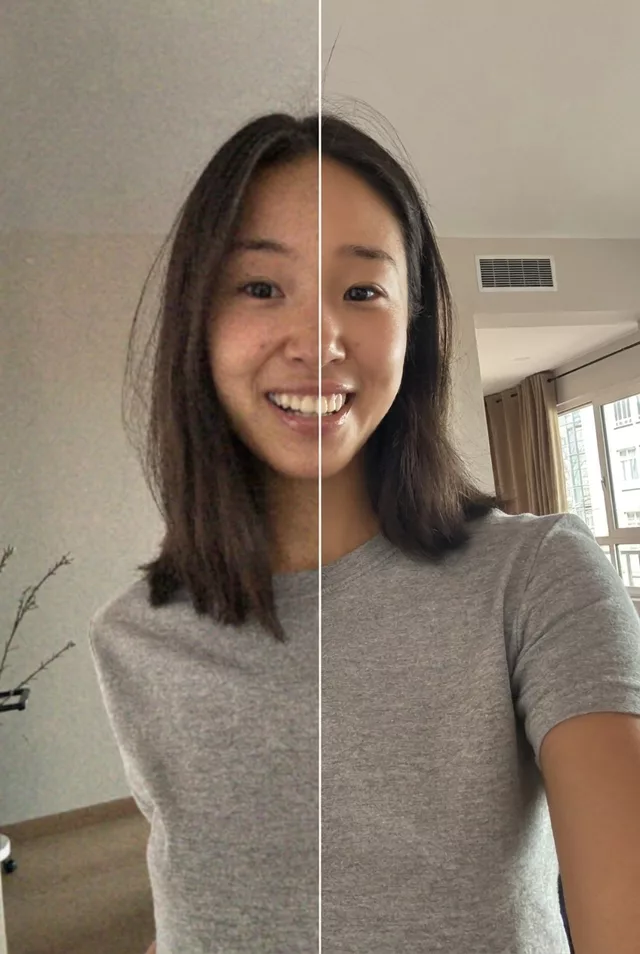
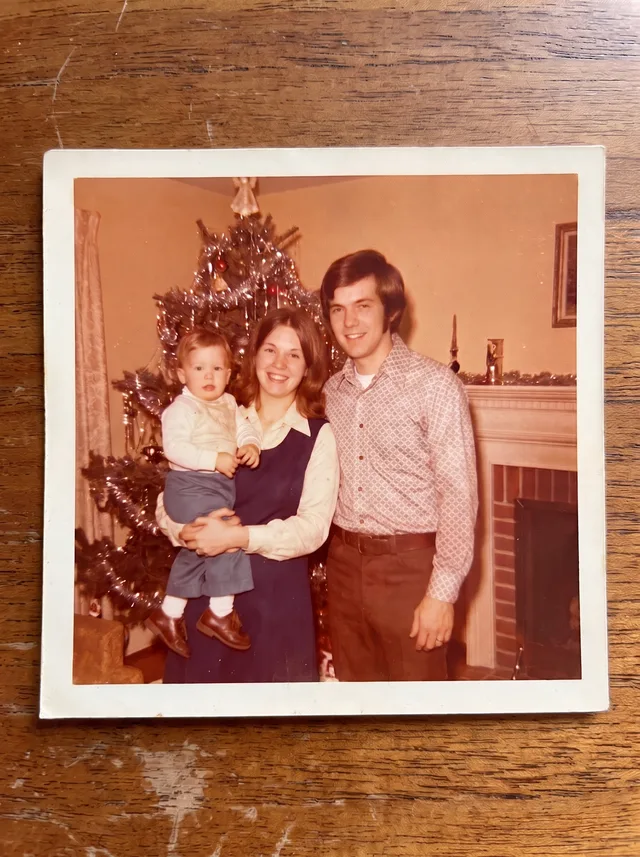
One run, on an AI-made 1960s studio portrait with a tide-line stain, lifted blotches and mould spots — one blotch covering her cheek beside her mouth. Every mark came out, and the cheek under the blotch was rebuilt to match the other side: eyes, brows, nose and smile line up with the source at full size. What changed without being asked: the warm sepia paper tone became a cool neutral grey, the background was evened out and the contrast went up, so it reads as a newer print than the original. If you want the old tone back, add 'keep the original warm sepia tone'. The rebuilt cheek is still a reconstruction; for a real relative, check it against another photo of them.