Glasses, Jewelry and Tattoos Vanish in AI Edits — How to Keep Them
The edit is good. The light is right, the face is yours, and your glasses are gone. Or your wedding ring has become a gold smear, or the tattoo on your forearm has come back as a design you have never seen before.
Worn details are the least reliable part of any AI photo edit, and they fail more quietly than a broken hand does — you can miss a missing earring for days.
Why These Specifically
Three things stack against anything you wear.
They are small. A pair of earrings might be 200 pixels in a portrait. There is very little information to carry across a regeneration, and small errors there cost the model nothing.
Glasses are the hardest object in a portrait. They are transparent, they reflect, they refract what is behind them, they cast shadows on the face, and they sit directly over the two features people look at first. A model that gets a jaw slightly wrong still produces a jaw; a model that gets glasses slightly wrong produces a distortion across your eyes.
Tattoos are texture, not object. A tattoo lives on skin the model is already rebuilding — and unlike a face, it has no structure the model can reason about. Any specific design is, to the model, an arbitrary pattern it has to reproduce from a small patch of pixels. It usually produces something tattoo-shaped instead.
It Fails in Both Directions
The instinct is to think of this as things disappearing. In practice, accessories are simply unmanaged — they go missing, they change, and they arrive uninvited.
Fix 1: Name It, With Shape and Material
“Keep my glasses” is weaker than it sounds. The model needs something to rebuild from, and a description gives it that:
Keep my glasses exactly as they are in the original photo:
thin round gold wire frames, clear lenses, no tint, sitting in
the same position on my nose. Do not change the frame shape,
colour or size. Do not remove my glasses.
Shape, material, colour, and an instruction not to remove them. Each one is doing separate work.
The same applies to jewelry. “Small gold hoop earrings in both ears” beats “earrings”, and “a plain gold band on my left ring finger” beats “my wedding ring”.
Fix 2: Say What Should Not Appear
Models add accessories to fill a look, especially when your style words imply a whole aesthetic. A 1990s studio portrait wants a choker. A romantic portrait wants pearls. If you did not ask for them, say so:
Do not add any jewelry, glasses, hats or hair accessories that
are not in the original photo.
This is worth including even when you are not wearing anything — a blank neckline reads as space to fill.
Fix 3: Tattoos Need Placement and Description
Expect a tattoo to be regenerated rather than preserved, and write for that:
I have a tattoo on my right forearm, on the outer side below the
elbow: a small black line-drawing of a fern, about 8 cm tall,
running lengthwise along the arm. Reproduce it in exactly that
position at that size. Do not add any other tattoos.
Even then, a detailed design will come back approximate. For anything that genuinely matters — a memorial piece, lettering, a name — the reliable answer is to crop it out of the transform, or accept that the result shows a tattoo rather than your tattoo. Lettering in particular will come back as invented characters.
Fix 4: The Glasses-Specific Ones
A few things only apply to eyewear.
Reflections. Models like to put a bright window reflection across both lenses, which hides your eyes. Add “clear lenses with no reflections or glare, eyes fully visible”.
Double frames. Watch for a second faint frame line just above or below the real one. It reads as a smudge at small size.
The temple arms. Check they reach your ears and pass behind them, rather than stopping in mid-air or vanishing into your hair.
Makeover prompts. Anything implying a glow-up — headshot, glamour, clean girl — is likely to take glasses off, because that is what those references look like. Those need the keep-clause most.
Fix 5: Repair in a Second Pass
If one detail is wrong and everything else is right, do not start over:
This image is correct except for the glasses, which have the
wrong frame shape. Redraw only the glasses as thin round gold
wire frames with clear lenses, in the same position.
Change nothing else in the image.
Accessory repairs work well in a second pass, better than face repairs do, because you are asking for an object rather than a specific person.
Fix 6: The Check Before You Post
Zoom to full size and look at each one in turn: both earrings, not just the visible one; whether a hoop or ring closes into a complete circle; the frame shape and both temple arms; whether a necklace chain is continuous or broken; whether a tattoo is in the right place and the right way up; and whether anything has been added that you were not wearing.
Where This Bites in Our Library
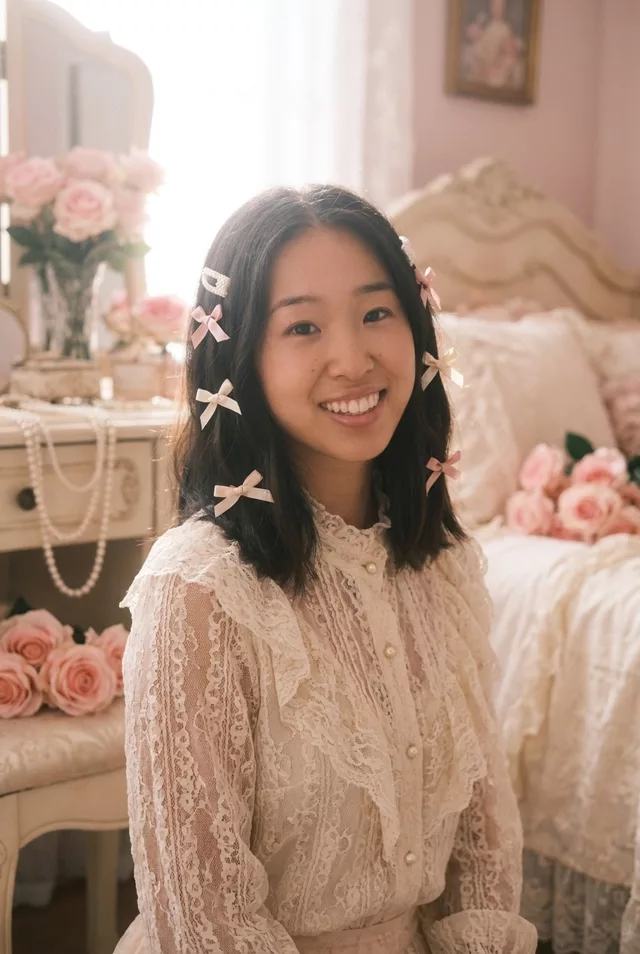
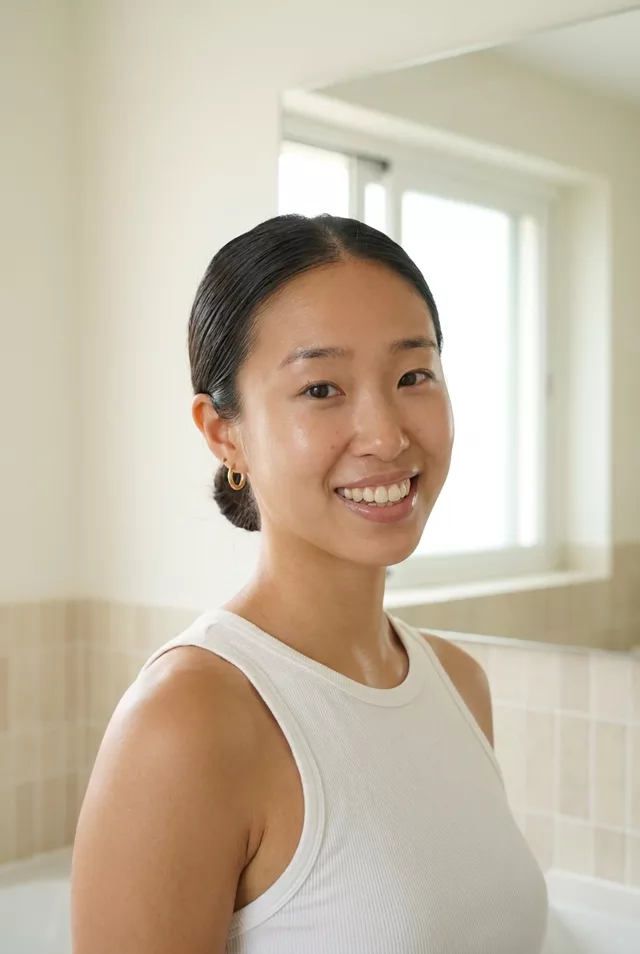
Worth knowing if you use our prompts: only two of the 77 prompts in the prompt library mention an accessory at all — the gold hoops in Clean Girl Morning and the ribbon bows in Coquette Soft Portrait. Every other prompt leaves accessories entirely to the model, which is why the clauses above are written to be pasted on top of one.
The same applies to anything you build in the prompt generator. It assembles style, subject and mood; accessories are not one of its choices, so add a line yourself.
FAQ
Why does it remove my glasses when I never mentioned them?
Because the prompt described a look, and the look it drew on mostly does not include glasses. Nothing decided to remove them; they were never carried across. A keep-clause is the fix.
Can I ask it to add glasses I do not own?
Yes, and this direction is much more reliable than preserving a specific pair — the model is free to produce any plausible pair rather than reproducing one. Describe the frame shape and colour and you will usually get it in a run or two.
My earrings came back mismatched. Is that fixable?
Usually, with a second pass that names both: “the same small gold hoop in each ear, matching size and shape”. Each ear is reconstructed separately, so nothing ties them to each other unless you say so.